

Table of Contents
Arizona Hard Water and Phoenix Plumbing Issues Explained
That chalky white residue on your faucets is rarely the whole story homeowners assume it is. Hard water and Phoenix plumbing issues often run much deeper, quietly damaging pipes and appliances for years before anyone notices a symptom worth calling about. Canilu Air breaks down exactly how this mineral-heavy water affects plumbing throughout the Valley, and what actually helps.
What Makes Phoenix Water So Hard
Hard water contains elevated levels of dissolved calcium and magnesium, picked up as water travels through mineral-rich soil and rock before it ever reaches a tap. Phoenix Metro draws from a mix of Salt River Project surface water, Central Arizona Project canal water, and groundwater wells, and most of these sources carry a naturally high mineral content. Water utilities across the Valley generally report hardness in the “very hard” range on the U.S. Geological Survey scale, which is why the effects show up in nearly every home Canilu Air services, not just older ones.
This is a regional water characteristic, not a defect in any specific home’s plumbing. Recognizing that helps homeowners treat hard water as a shared, addressable challenge rather than a sign something has gone wrong with their system specifically.
Worth the Extra Step
- Phoenix Metro water is classified as very hard on most standard hardness scales.
- The mineral load comes from the water source itself, not from anything in a home’s plumbing.
How Hard Water Pipe Damage Develops Over Time
Mineral deposits gradually build up alongside the interior walls of pipes, slowly narrowing the space water actually flows through. Canilu Air has opened pipe sections showing scale thick enough to noticeably restrict flow, built up over years of exposure that went completely unnoticed until the symptoms became obvious.
Older galvanized pipes are especially vulnerable to this kind of internal scale accumulation compared to newer copper or PEX piping, since their rougher interior surface gives mineral deposits more to grip onto. Homes with original 1970s or 1980s plumbing tend to show the most significant deterioration during an inspection, simply because they’ve had more decades of hard water passing through the same lines.
What This Means for Your Home
- Scale narrows pipe interiors gradually, often over a decade or more before flow problems appear.
- Galvanized piping deteriorates faster than copper or PEX under the same water conditions.
Signs Your Home Is Experiencing Hard Water Plumbing Issues
Spotty dishes, soap that won’t lather well, and a filmy residue on skin after showering are the everyday signs most homeowners notice first. Canilu Air also checks for visible scale on fixtures and unusually short appliance lifespans during any inspection, since those often point to the same underlying cause.
A noticeable decline in water heater performance or an appliance failing well before its expected lifespan both warrant a closer look at hard water as a contributing factor. No single sign proves much on its own, but taken together they paint a fairly clear picture.
Something to Watch For
- Spotty dishes and weak lather are usually the earliest visible clues.
- An appliance failing years ahead of schedule is worth investigating, not just replacing.
How Reduced Water Pressure Connects to Hard Water
A gradual decline in water pressure throughout a home often traces directly back to mineral buildup narrowing pipe interiors. Because the decline happens slowly, many homeowners simply adjust their expectations instead of recognizing it as a solvable problem. Canilu Air can measure a home’s actual pressure and compare it against expected baseline levels for its size and plumbing age.
Older homes with more mineral-affected piping tend to show this decline more dramatically than newer construction. Clearing the underlying buildup, rather than living with reduced flow, often restores noticeably better pressure throughout the house.
The Technician’s Take
- Pressure loss that develops over months or years is a common hard water symptom, not just aging plumbing.
- Restoring flow usually means addressing the mineral buildup directly, not just the symptom.
Fixtures and Appliances That Show Wear First
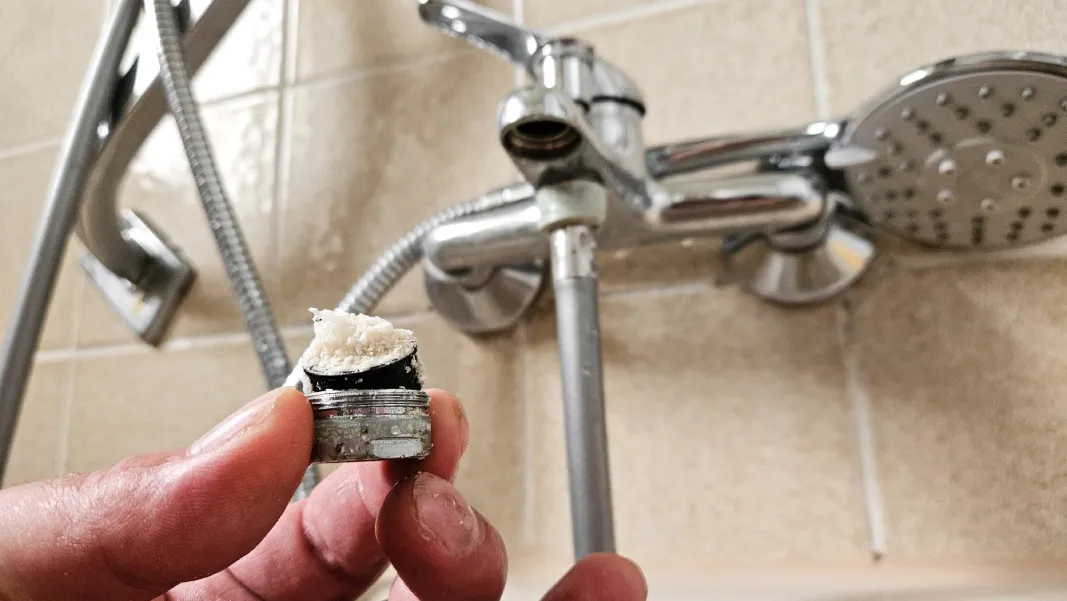
Faucets, showerheads, and water heaters tend to show visible mineral damage well before any pipe-related symptom shows up. White or chalky buildup around faucet aerators and showerhead openings is usually the first sign something is happening.
Dishwashers and washing machines also accumulate scale internally, gradually reducing efficiency and shortening the appliance’s expected lifespan. Over time, this appliance-level wear often costs homeowners more than the mineral buildup inside the pipes themselves, since a shortened appliance life means an earlier replacement bill.
A Detail That Matters
- Aerators and showerhead openings are usually the first visible casualties.
- Reduced appliance efficiency from internal scale often shows up on the utility bill before it shows up as a breakdown.
Water Heaters: Ground Zero for Mineral Buildup
Water heaters concentrate mineral deposits at the bottom of the tank as water heats and minerals settle out of solution. Canilu Air regularly flushes tanks holding several inches of sediment in homes that have never had this service done, and that sediment layer reduces heating efficiency while raising the risk of premature tank failure.
Tankless water heaters face a different version of the same problem, since scale builds up inside the unit’s heat exchanger instead of settling at the bottom of a tank. Age compounds the issue either way: a ten-year-old tank in a hard water area typically shows more internal wear than an identically aged tank in a softer-water region, simply from more years of mineral exposure. That combined factor of age and water hardness is exactly what we weigh when helping a homeowner decide between continued maintenance and eventual replacement.
Prevention Pays Off
- Sediment settles at the tank bottom with every heating cycle, and it accumulates faster in hard water areas.
- A water heater’s true remaining lifespan depends on age and water hardness together, not age alone.
How Hard Water Affects Toilets and Other Fixtures
Toilet tanks and bowls pick up the same mineral staining and internal component wear affecting other fixtures in the house. Canilu Air often finds mineral buildup behind a toilet’s flush mechanism sticking or running improperly, and clearing that buildup sometimes resolves a running toilet that looked unrelated to water hardness at first glance.
Showerheads clog the same way, as mineral deposits gradually narrow the small openings responsible for spray pattern and pressure. Regular cleaning slows the process, but a whole-home solution addresses it at the source instead of managing it fixture by fixture.
Good to Know
- A running or sticking toilet is sometimes a hard water issue in disguise.
- Cleaning showerheads treats the symptom; a whole-home approach treats the cause.
More Than Cosmetic: Why This Issue Deserves Real Attention
Many homeowners view hard water spots as a purely cosmetic annoyance rather than a genuine plumbing concern. The same minerals causing those visible spots are also settling inside pipes, water heaters, and appliances, which is why a wider view helps homeowners prioritize addressing hard water before the damage adds up to a real repair bill.
Treating hard water as a plumbing health issue, not just an aesthetic one, tends to lead to better long-term decisions about maintenance and replacement timing.
The Practical Takeaway
- Cosmetic mineral spots and internal plumbing wear come from the exact same source.
- Addressing hard water early is almost always cheaper than replacing damaged pipes or appliances later.
Frequently Asked Questions
How can I tell if hard water is damaging my pipes?
Look for a gradual drop in water pressure, chalky white buildup around faucets and showerheads, and spotting on dishes or glassware straight out of the dishwasher. None of these on their own confirms pipe damage, but together they’re a strong signal it’s worth having a technician run a pressure check and take a look at any accessible pipe sections. Catching scale buildup early, before it restricts flow significantly, is far cheaper than replacing a section of corroded galvanized pipe later.
Do all Phoenix Metro homes have hard water?
Yes, to some degree. Phoenix Metro’s water supply carries a naturally high mineral content, and most utilities across the Valley report hardness levels in the “very hard” range. The exact hardness can vary slightly by neighborhood and water source, but almost no home in the region is working with naturally soft water.
Is a water softener the only solution for hard water plumbing issues?
A whole-home softener is the only fix that addresses the root cause, since it removes calcium and magnesium before they ever reach pipes, fixtures, or appliances. That said, it’s not the only tool available. Regular water heater flushing, periodic descaling of showerheads and aerators, and routine plumbing inspections all help manage the effects in the meantime, especially for homeowners who aren’t ready to install a softener yet. Many homeowners use a combination of both.
How often should a water heater be flushed because of hard water?
In a hard water market like Phoenix, most manufacturers and plumbers recommend flushing a tank-style water heater once a year, rather than the every-few-years interval that’s sometimes fine in softer-water regions. Homes without a softener installed often benefit from checking sediment levels even more frequently, since a tank that’s never been flushed can accumulate several inches of buildup within just a few years.
Can hard water actually shorten the lifespan of my plumbing and appliances?
Yes. Mineral scale narrows pipe interiors, forces water heaters to work harder to heat through a layer of sediment, and makes dishwashers, washing machines, and coffee makers less efficient over time. None of this happens overnight, but the cumulative effect is real: appliances in hard water homes commonly need replacement years earlier than the same models would in a soft water area, and pipes can develop restricted flow or leaks well ahead of their expected service life.
Is Phoenix's hard water actually safe to drink?
Generally, yes. Hardness itself is classified as a secondary, aesthetic water quality issue rather than a health hazard, and calcium and magnesium are naturally occurring minerals the body already needs in small amounts. The concern with hard water is almost entirely about its effect on plumbing, fixtures, and appliances, not drinking water safety. Homeowners with specific water quality concerns beyond hardness should ask about a full water test rather than relying on hardness assumptions alone.
Conclusion
Hard water’s effects on Arizona plumbing develop slowly, but they’re genuinely addressable with the right professional attention and a bit of ongoing awareness over time. Canilu Air is ready to help Phoenix Metro homeowners understand and manage this common regional challenge, one home at a time.
Canilu Air
NATE-Certified • Serving 19 Cities Across Phoenix Metro
Call 602-609-3480 to schedule a hard water plumbing assessment today.