

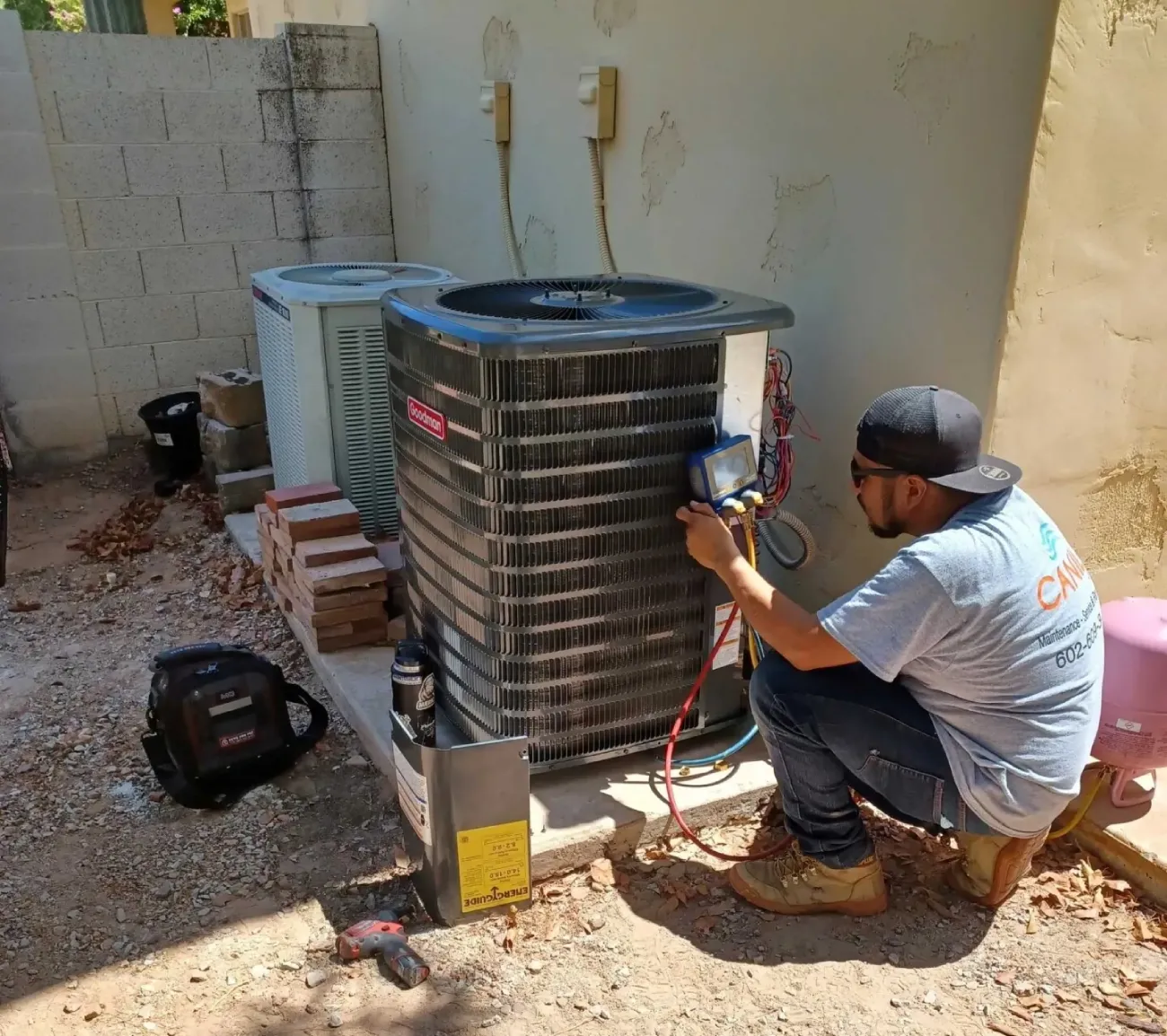
A winter HVAC checkup is worth doing in Arizona even though winters are mild, because a heating system that has been unused since last winter can develop small problems that only show up when it first runs. A quick fall check confirms the system heats safely before the first cool night. This guide covers what a checkup includes, what you can do yourself, and when a problem needs repair.
Why Does an HVAC System Need Winter Prep in Arizona?
Heating components sit idle for most of the year, and idle equipment can fail quietly. Dust settles on parts, electrical connections can loosen after a long cooling season, and thermostat settings may not switch cleanly between cooling and heating.
These issues rarely announce themselves in summer. They surface the first time the system is asked to heat, often on the coolest night of the week, when a repair call is least convenient. Catching them in a mild fall week is easier and less stressful.
What Does a Winter HVAC Checkup Include?
A checkup confirms that the system can switch to heating mode and run safely. Typical items include:
- Thermostat: confirming it changes properly from cooling to heating and reads temperature accurately
- Electrical connections: checking wiring and components that wear with heavy summer use
- Airflow: inspecting filters, vents, and ductwork so the system is not restricted
- Safety and operation: confirming the system starts, runs, and shuts off correctly, with attention to gas components where the home has a furnace
Airflow matters more than it seems. Restricted airflow makes a heating system run hotter and work harder, which can trip safety limits or shorten the equipment’s life.
What Can Homeowners Check Themselves?
Three simple steps help before any professional visit:
1. Test the thermostat: switch it to heat and confirm the system responds, and replace batteries if it uses them
2. Replace a dirty filter: a clean filter restores airflow and helps the system run efficiently
3. Clear the vents: move furniture, rugs, and debris away from registers so warm air can circulate
These steps do not replace a professional inspection, but they remove the most common causes of weak or uneven heat.

How Do You Test Your Heating System at Home?
Run the heat for 10 to 15 minutes on a cool morning or evening before you truly need it. Listen for unusual noises, check that warm air reaches each room, and confirm the system cycles off normally.
A brief, mild odor on the first startup is common, since dust that collected on heating components burns off. A strong or lasting burning smell is different, so shut the system off and call a technician. Testing early also leaves time to schedule a repair before the first cold night.
When Does a Heater Need Repair Instead of a Checkup?
A heater needs repair when it fails to heat or shows signs of a safety problem. Watch for:
- No warm air at all when the system is running
- A strong or persistent burning smell
- Loud banging, grinding, or squealing noises
- Visible damage or water around the unit
- The system shutting off repeatedly shortly after starting
If you smell gas, leave the home and call your gas utility from outside. A carbon monoxide detector with working batteries is also a sound precaution for any home with gas heating.
A complete lack of heat on a cold night is worth prompt attention. Canilu Air offers timely response for urgent heating problems even during the slower winter season. Call 602-609-3480 to schedule a winter HVAC checkup or request service.
Can You Combine a Winter Checkup With an AC Check?
Yes, and doing both in one visit saves time. Many systems share components such as the thermostat, blower, and ductwork, so a single appointment can confirm the system is ready for both seasons. This is especially useful for heat pump systems, which handle both cooling and heating with the same equipment.